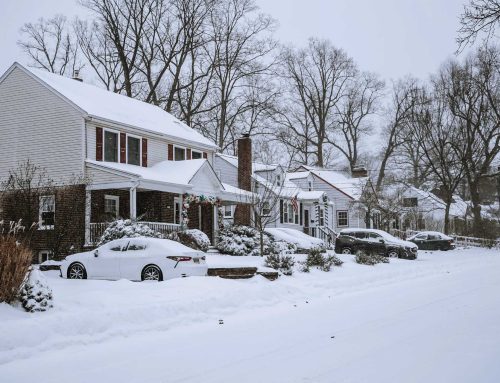
When severe winter weather descends and ice becomes a daily hazard, many homeowners automatically reach for common rock salt without considering the consequences. While salt certainly increases safety by providing immediate traction and melting ice for walking and driving, the decision is not as simple as it initially appears. The convenience of rock salt often comes at the expense of accelerated long-term wear on the asphalt driveway itself. Furthermore, the corrosive runoff from melting snow can cause extensive collateral damage, affecting nearby landscaping, delicate perennial plants, and even adjacent structural surfaces like stone steps or home siding if the wrong products are applied.
Understanding the actual impact of sodium chloride on asphalt integrity is crucial for any Canadian property owner committed to long-term maintenance. This analysis will outline the specific risks associated with salt, detail how it interacts with the freeze-thaw cycle to accelerate damage, and present safer, durable alternatives for effective ice management.
The Primary Risk: Salt’s Impact on Asphalt Integrity
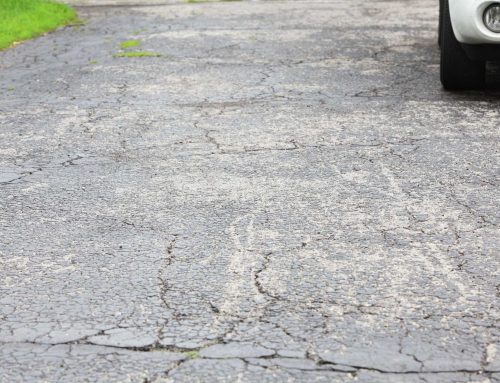
De-icing salt damages asphalt through chemical erosion and hidden structural weakening. Asphalt is held together by an oil-based binder, but chloride ions from dissolved rock salt penetrate its microscopic pores and gradually break down this binding agent. As the binder weakens, it loses its grip on the aggregate, leading to surface flaking, premature wear, and the gradual loss of the driveway’s protective top layer. This deterioration makes the pavement far more vulnerable to the stresses of winter.
Salt also intensifies freeze–thaw damage by forming a brine solution that seeps deeper into cracks and porous areas. When temperatures drop, this brine refreezes at lower thresholds than pure water, subjecting the pavement to more frequent and aggressive expansion cycles. Small cracks quickly grow into deep fissures that allow moisture to reach the sub-base, compromising the driveway’s entire structural integrity. Homeowners who assume asphalt is naturally resistant to salt often face costly repairs much sooner than expected. This is why proactive winter maintenance is essential for anyone looking to maintain their asphalt driveway for the long term.
Secondary Damage: The Environmexntal and Surface Runoff Concerns
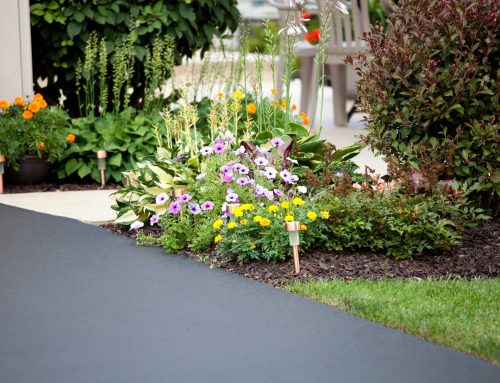
The corrosive impact of salt extends far beyond the asphalt driveway, creating serious environmental and runoff concerns. When winter ice melts, the resulting chloride brine flows into nearby soil and landscaping, where it disrupts nutrient uptake and dehydrates plant roots. Over time, this leads to damaged grass, weakened shrubs, and the death of sensitive perennials, often requiring costly soil replacement and landscaping restoration. This same brine also reaches surrounding hard surfaces, splashing onto garage floors, stone walkways, and exterior siding. On concrete, it accelerates spalling and surface degradation, while on wood or vinyl trim, it leaves stubborn residue and can weaken protective finishes.
Salt runoff also poses a hidden but serious threat to vehicles. Even though modern coatings are more resilient, repeated exposure to accumulated brine in wheel wells, seams, and brake components rapidly accelerates corrosion and rust. This deterioration shortens the lifespan of critical parts and can lead to expensive repairs. Homeowners hoping to maintain their asphalt driveway must recognize that their de-icing method affects far more than the pavement—it impacts plant health, nearby structures, and the long-term durability of the vehicles parked on it.
Safer Alternatives for Effective Ice Management
Safer alternatives exist that allow homeowners to manage ice effectively while drastically reducing corrosive risk. De-icing products made with Potassium Chloride or Magnesium Chloride work at lower temperatures and are far less damaging to asphalt than traditional rock salt. They also pose less harm to surrounding landscaping, though their higher cost requires homeowners to weigh the up-front expense against long-term savings from reduced pavement deterioration and avoided plant damage. For those prioritizing environmental and structural safety, Calcium Magnesium Acetate (CMA) is an excellent choice. It is biodegradable, non-corrosive, and prevents ice from bonding to the pavement, making removal much easier and helping homeowners winterproof their driveways without compromising longevity.
Non-chemical methods offer additional safe traction solutions. Clean sand or non-clumping kitty litter provides immediate grip without affecting the freezing point of water or causing surface erosion. These options work especially well for temporary walking paths or driveways that need quick, non-destructive traction. Just as important is proactive snow management—shovelling before snow compacts or turns to ice dramatically reduces the need for chemical agents. This simple preventative measure ensures homeowners can winterproof their driveway with minimal risk while protecting the asphalt, surrounding greenery, and nearby structures.
Practical Winter Driveway Maintenance Tips
Homeowners can significantly reduce winter damage by adopting a few key fall maintenance steps. Applying a high-quality sealant before the first freeze creates a strong barrier against moisture and chemical penetration, helping the asphalt withstand the intense pressure of the freeze-thaw cycle. If de-icers are necessary, they should be used sparingly—only enough to form the brine needed for melting. Over-application accelerates chemical erosion, harms nearby landscaping, and increases long-term repair costs. A careful, minimal approach not only protects the pavement but also helps winterproof your asphalt driveway more effectively.
Maintaining proper drainage throughout the winter is equally essential. Driveway edges, garage entrances, and runoff paths must remain clear so meltwater and brine do not pool on the surface and seep deep into the asphalt. Standing water dramatically increases the risk of freeze-thaw damage, especially when combined with corrosive de-icing chemicals. Ensuring downspouts direct water away from the driveway and keeping curbside drainage unobstructed channels harmful runoff safely away, protecting both the pavement and the surrounding landscaping.
The Cost of Convenience vs. Durability
The choice to use cheap rock salt represents a trade-off: short-term convenience versus long-term durability. While rock salt offers an immediate, inexpensive solution to ice, its hidden long-term costs—accelerated driveway deterioration, premature repair bills, and environmental damage from corrosive runoff—far outweigh the momentary benefit. By adopting non-corrosive alternatives and consistent preventative maintenance, homeowners preserve both the appearance and structural strength of their pavement for years to come. Inspecting the surface for cracks and committing to a safer de-icing strategy is the most financially responsible approach to winter care—especially since choosing an asphalt driveway offers many advantages when it’s properly protected.