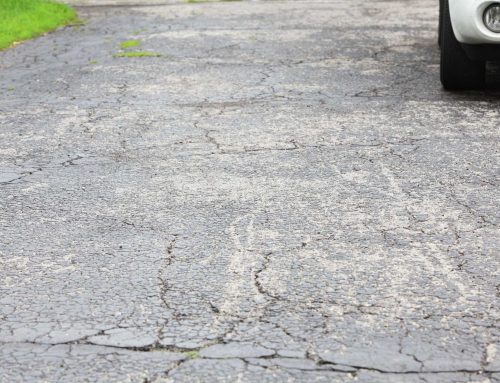
As the last stubborn snowbanks vanish from the edges of your property, a familiar sight emerges: the aftermath of a Canadian winter. For many homeowners, the sight of a weary asphalt driveway is a sobering reminder of the season’s intensity. Just as you might visit a muffler shop to repair the damage salt and slush have dealt to your vehicle’s undercarriage, your home’s entrance requires its own specialized attention this time of year. Performing a thorough spring driveway inspection and repair is the only way to ensure winter’s wear doesn’t become summer’s structural failure.
In the paving industry, we refer to April as the “Golden Month.” It is a brief, strategic window where the environmental conditions are perfectly aligned for structural maintenance. A cracked, crumbling entrance doesn’t just look poor—it devalues your entire investment. By understanding the science of the “Goldilocks” zone, you can catch winter damage before it becomes a five-figure replacement project.
The April “Goldilocks” Zone: Why Timing is Everything
The Canadian spring is notoriously unpredictable, but April offers a specific geological advantage. By mid-month, the ground has typically finished its major “heaving”—the violent upward movement caused by frozen soil. If you attempt repairs too early in March, the sub-grade may still be shifting, which would cause any new repairs to crack within weeks.
However, waiting until May is often too late. The heavy, consistent “monsoon” rains of late spring can saturate the sub-grade, turning minor cracks into deep sinkholes. April is the “Goldilocks” zone: the ground is stable, the frost is gone, and the heavy rains haven’t yet arrived to undermine the foundation. It is the only time of year when you can perform a spring driveway inspection and repair with the certainty that the ground beneath the surface is ready to be sealed.
The Science of the Window: Temperature vs. Compaction
Why does the thermometer matter so much for your pavement? The answer lies in the chemistry of asphalt. For asphalt to cure with maximum density and a glass-smooth finish, it requires stable ambient temperatures. In Canada, April’s 10°C to 15°C weather is the “sweet spot.”
At these temperatures, the oils in the asphalt remain workable. This allows a professional crew to achieve perfect compaction, ensuring that the new material bonds seamlessly with the old. If the air is too cold, the asphalt “sets” before it can be properly compressed, leading to a porous surface that will fail by next winter. Conversely, if it is too hot, the material can stay soft for too long. By choosing this “Golden Month,” you ensure that the repair is as dense and water-resistant as the day the driveway was originally poured.
The 3-Step Spring Driveway Inspection
Before you can fix the problem, you have to understand how winter’s freeze-thaw cycles affect your driveway. Water is the only substance that expands as it freezes, and when that expansion happens inside a small crack, it acts like a hydraulic jack. To assess the damage, every homeowner should perform this three-step audit:
1. The “Alligator” Check
Walk your driveway and look for patterns that resemble the scales on a reptile’s back. This is known as “alligator cracking.” It is a sign of fatigue failure. Unlike a single straight crack, alligatoring suggests that the gravel base beneath the asphalt has been compromised by moisture. Identifying this now is critical; if caught early, a patch can save the surrounding area, but if ignored, the entire section will soon collapse.
2. The Edge Audit
Check the perimeter where the asphalt meets your lawn or landscaping. This is where snowplows, heavy snow piles, and salt runoff do the most damage. Look for “crumbling” or “ravelling” at the edges. Since the edges lack the lateral support of the main driveway body, they are often the first to fail. Strengthening these edges in April prevents the driveway from “shrinking” over time.
3. The Pooling Test
After a light April shower, go outside and see where the water sits. Identifying “birdbaths”—small depressions where water pools—is essential. In the summer, these are just puddles. In the winter, they are the birthplaces of potholes. By identifying these low spots now, you can have them levelled and brought back to grade, ensuring water flows away from your home’s foundation.
Targeted Repairs: Moving Beyond the “Band-Aid”
Many homeowners make the mistake of buying “cold-patch” bags from a big-box store in February. While these are fine for emergency repairs, they are temporary bandages. April is the first month of the year that asphalt plants in Canada typically reopen for the season. This means “Hot-Mix” becomes available.
Hot-Mix Patching involves heating the surrounding pavement and applying fresh, molten asphalt that fuses to the existing structure. This creates a permanent, waterproof bond. Additionally, this is the time for structural crack sealing. By using a rubberized, hot-poured sealant, you create a flexible bridge over surface cracks and erosion. This prevents the May rains from entering the sub-base and washing away the dirt that supports your driveway. Without this support, the weight of your car would simply snap the asphalt like a cracker.
The Financial Hook: Curb Appeal and 2026 ROI
In the current real estate market, your driveway is the “welcome mat” of your property. If you were to list your home today, a real estate agent would tell you that the driveway is one of the first things a prospective buyer sees. A neglected entrance suggests a neglected home.
Beyond aesthetics, there is the simple math of maintenance. A full replacement of an asphalt driveway in 2026 can easily cost upwards of $15,000. In contrast, a comprehensive spring driveway inspection and repair in April might only cost a fraction of that. Proactive maintenance can extend the lifespan of your asphalt driveway by five to ten years. In an era of high interest rates and rising material costs, spending a few hundred dollars today to save twenty thousand dollars tomorrow is the smartest financial move a homeowner can make.
Secure Your Surface Before the Rain
April 2026 isn’t just about spring cleaning; it’s about structural preservation. The damage dealt by the recent freeze-thaw cycles in the winter affects your driveway in ways that aren’t always obvious at a glance. By taking the time to audit your property during this “Golden Month,” you ensure that your entrance remains both beautiful and functional.
Don’t wait for the high-volume runoff of May to find the weaknesses in your pavement. Whether you are dealing with minor surface cracks and erosion or more significant base failures, April provides the perfect atmospheric conditions to restore your home’s curb appeal. Remember, your driveway should be a reflection of your personal style and functional needs—not a collection of potholes and patches.
Contact a professional this week to schedule your assessment. By the time the summer heat arrives, you’ll be resting easy on a surface that is smooth, sealed, and ready to last for years to come. Secure your investment now, while the window is still open.