Pulling into your property should always bring a sense of pride and structural security. For many Canadian homeowners, a smooth, deep-black asphalt driveway serves as the ultimate welcoming mat for their home. However, as the pavement ages under severe weather, mysterious patterns can begin to take shape across your driving lanes. When you notice a network of tightly interconnected, scaly fissures that resemble the skin of a reptile, you are looking at alligator cracks. This pattern is not a minor blemish but a clear sign of deep structural trouble.
Many property owners mistake this advanced wear pattern for a simple cosmetic issue that can be easily brushed over with a tub of cheap retail sealant. This error is identical to ignoring a cracked home foundation simply because the indoor drywall looks flat. While a homeowner might regularly call an HVAC company to keep their indoor systems running perfectly, they often leave their exterior load-bearing pavement completely neglected. Understanding why these complex fractures form is the first step toward saving your pavement from complete structural failure. Acting early allows you to protect your property’s curb appeal and prevent an expensive excavation crisis.
The Quick Edit
- The Core Failure: Alligator cracking indicates that the load-bearing stone foundation beneath your driveway has completely collapsed due to water saturation or shifting soil.
- The Topical Myth: Applying liquid crack-filler over alligator webbing is a temporary bandage that will fail during the very next seasonal temperature shift.
- The Ultimate Solution: Resolving fatigue cracks permanently requires professional structural excavation and deep sub-base remediation rather than superficial patching.
The Root Cause: How Sub-Base Failure Destroys Surface Asphalt
To understand why alligator cracking occurs, you must look beneath the top black layer of your driveway. Asphalt pavement is engineered as a flexible composite material made of stone aggregates bound together by liquid petroleum asphalt cement. This flexible surface layer is not designed to support the heavy weight of cars and trucks on its own. Instead, it relies entirely on a solid, highly compacted crushed stone foundation buried directly underneath it.
When that underlying gravel sub-base loses its structural strength, it can no longer support the traffic load above. Every time a car parks on the driveway, the weak foundation shifts and sinks into the soft dirt below. This movement forces the flexible surface asphalt to bend past its mechanical limits, causing it to snap. As thousands of tiny micro-fractures spread outward from the stress point, they connect to form a web of alligator cracks across your pavement. Once this interlocking pattern appears, your driveway’s underlying structural integrity has been completely compromised.
The Canadian Freeze-Thaw Multiplier: Winter’s Role in Foundation Erosion
The harsh Canadian climate acts as an absolute accelerant for any driveway suffering from early foundation wear. During the spring thaw and heavy autumn rainstorms, water runs freely across your pavement. If your driveway is already unsealed, this water will easily seep down into the open network of alligator cracks. The liquid travels straight through the surface layer, pooling directly within the compacted gravel sub-base below.
When the temperature drops to freezing during cold Canadian nights, this trapped water undergoes a violent physical transformation. As water freezes into solid ice, its total volume expands by roughly nine percent with immense mechanical force. This expansion pushes the surrounding gravel stones apart, destroying the compaction that gives the foundation its strength.
When daytime temperatures rise and the ice melts, it leaves behind large, hollow air pockets in the stone layer. The next vehicle that drives over that hollow spot will instantly smash the unsupported asphalt downward into the empty space. This cycle repeats dozens of times each season, turning a minor foundation issue into a widespread structural disaster.
Why Topical Patch Fixes Fail on Webbed Pavement
Many well-meaning homeowners try to solve this issue by purchasing pourable liquid crack sealants from their local home improvement center. They spend hours filling the scaly web lines, hoping to create a waterproof barrier that protects their pavement. While this approach works beautifully for isolated, straight-line thermal cracks, it is completely useless against alligator webbing. Shoving surface patches over a shifting foundation is a waste of money that only delays the inevitable repair process.
Because the underlying stone foundation is constantly moving, the asphalt sections between the cracks remain highly unstable. As cars drive over the patched area, the loose pieces of pavement twist and flex against each other like loose jigsaw tiles. This continuous movement quickly tears the fresh liquid sealant away from the edges of the old asphalt. Within a few weeks, the patch will peel away, allowing rain and melting snow to pour back into the foundation. To truly make your asphalt paving last longer, you must address the hidden structural failure below rather than treating the surface symptoms.
The Pavement Remediation Matrix
Evaluating your repair choices using structural data helps you select the right fix for your driveway’s current condition:
|
Pavement Failure Level
|
Underlying Structural State
|
Recommended Repair Approach
|
Expected Longevity
|
|
Early Hairline Fissures
|
Sub-base is fully stable; surface is drying out from UV exposure.
|
Apply a premium commercial rubberized liquid crack sealant.
|
2 to 4 Years of Protection
|
|
Isolated Alligator Zones
|
Small areas of the foundation are failing due to localized water pooling.
|
Infrared asphalt patching to melt and replace the broken sub-base.
|
5 to 8 Years of Stability
|
|
Widespread Webbed Cracking
|
The entire load-bearing gravel sub-base has collapsed completely.
|
Execute a full structural excavation and install a new stone foundation.
|
20+ Years of Reliable Service
|
|
Surface Pitting & Raveling
|
Top asphalt paste has degraded, releasing loose aggregate stones.
|
Professional sealcoating to prevent surface cracks and erosion.
|
3 to 5 Years of Surface Wear
|
Progressive Ruin: From Alligator Webbing to Potholes and Ravelling
Leaving alligator cracking unaddressed sets off a destructive chain reaction that will rapidly ruin your entire driveway layout. As vehicles continue to drive over the unstable, webbed pavement, the individual pieces of asphalt begin to rub against each other. This continuous mechanical friction grinds down the sharp edges of the fractured tiles, breaking them loose from the surrounding pavement matrix. This progressive breakdown process is known in the paving industry as ravelling.
Once ravelling begins, your car tires will start flicking loose chunks of black stone and gravel out of the driveway every time you park. These empty gaps allow more water to pool on the surface, which accelerates the erosion of the exposed foundation stones. Within a few months, these small gravel pockets will deepen into large, tire-popping potholes that can damage your vehicle’s suspension.
Waiting until your driveway turns into a landscape of deep potholes makes simple repairs completely impossible. The cost of fixing a total structural failure is significantly higher than addressing isolated foundation issues when they first appear.
Professional Restoration Options: Infrared Patching vs. Total Excavation
When dealing with advanced fatigue cracks, you must work with an experienced paving contractor to choose the right repair method. If the alligator pattern is limited to a small, isolated section of your driveway, infrared patch repair is an excellent option. Contractors use a specialized infrared heating panel to melt the damaged asphalt surface back into a workable, liquid state.
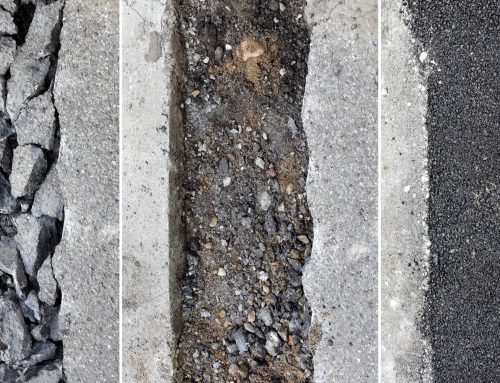
Once the area is hot, they rake away the broken material, correct the soft foundation stones below, add fresh hot-mix asphalt, and compact the entire zone. This process creates a seamless, thermal bond that prevents water from leaking into the old seams.
However, if the web-like fractures cover more than twenty-five percent of your total driveway surface, infrared patching will not provide a long-term solution. At this stage, it means the entire stone foundation has lost its structural compaction.
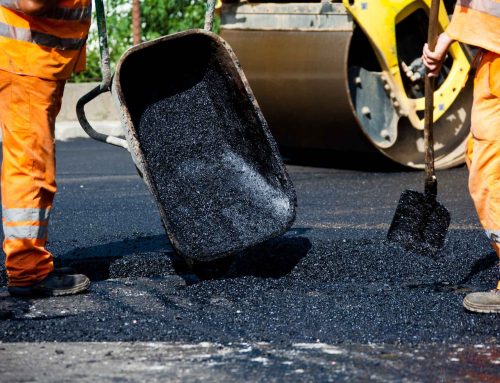
When you reach this advanced state of failure, it’s time for a full driveway replacement from the ground up. A professional crew must bring in heavy equipment to excavate the broken asphalt and scoop out the ruined, mud-soaked sub-base. They will then install a thick layer of fresh, crushed limestone aggregate and compact it using heavy vibratory rollers before pouring a brand new asphalt surface.
Reclaiming Your Driveway’s Foundation
Allowing alligator cracks to spread across your driveway is a costly mistake that directly threatens your property’s value and structural safety. Leaving your pavement completely defenceless against water penetration and sub-base erosion leads to rapid ravelling, deep potholes, and total foundation failure. Trying to save money by applying cheap topical sealants over moving asphalt tiles is a temporary fix that will fail during the next freeze-thaw cycle. By partnering with an experienced paving contractor, clearing out soft subsoil, and choosing a complete structural solution, you protect your capital investment. This proactive approach to pavement care ensures your driveway remains smooth, clean, and beautifully intact through decades of harsh Canadian winters.